
Flake Epoxy Floor Coatings in St. George, UT
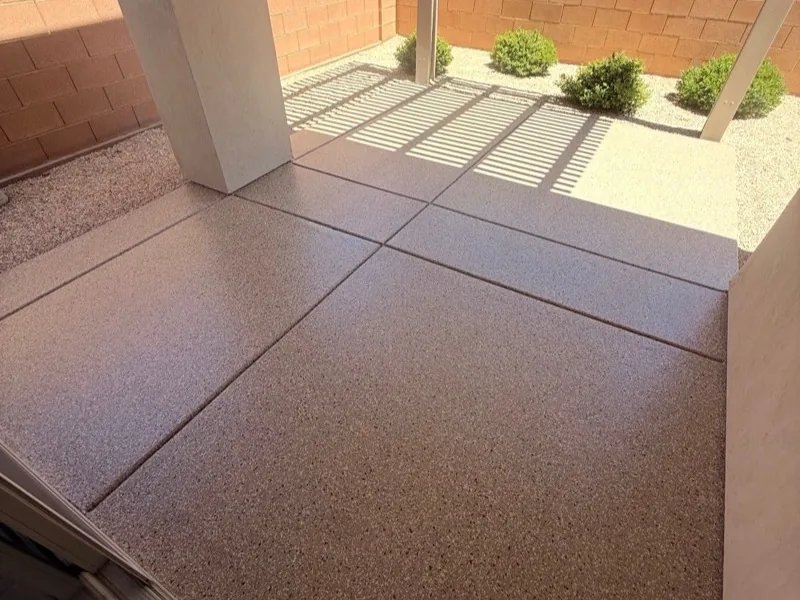
Quick answer: A flake epoxy floor is a pigmented base coat with vinyl color chips broadcast to full coverage, scraped, and sealed with a clear topcoat. It is the most popular garage floor in St. George because it hides red dust, adds traction, forgives imperfect older concrete, and pairs with a UV-stable polyaspartic topcoat that won't yellow. Call (435) 291-8646.
Flake (also called chip or broadcast) epoxy is the workhorse of residential garage floors. In southern Utah, where garages collect fine dust, sprinkler overspray, and heat, it's the system we recommend most often — and it's the one most of our Washington, Hurricane, and St. George customers choose.
How is a flake epoxy floor built?
- Diamond grind the slab with dust extraction, repair cracks and spalls, and detail joints
- Apply a pigmented base coat that matches the chip blend
- Broadcast vinyl flakes to rejection — full coverage so no base shows through
- Scrape and vacuum loose chips for a uniform, even texture
- Seal with one or two clear topcoats, usually polyaspartic for UV and chemical resistance
Why is flake epoxy popular in St. George garages?
- Hides dust and water spots between cleanings — a big deal with red desert dust and hard water
- Textured surface adds grip; extra anti-slip additive available for steps and entries
- Forgiving of minor slab imperfections and repaired cracks on older Bloomington and Santa Clara homes
- Color blends that suit local homes — tan, sandstone, coral, and gray to match stucco and tile roofs
- Durable against hot tires, dropped tools, and common garage chemicals
Choosing a chip blend for a desert home
The most requested blends here are warm neutrals: tans, browns, and creams with a little black or gray to hide tire marks. Lighter blends keep a garage brighter and slightly cooler to the eye; darker blends show dust more. We bring physical samples so you can see them in your garage's actual light, because a chip that looks gray under fluorescent tubes can look tan in afternoon sun through the door. A brighter floor also reflects light, which helps in garages with a single overhead fixture.
Full flake vs partial flake: what's the difference?
Partial (light) broadcast sprinkles chips over a solid color; it costs a little less but shows more base color and has less texture. Full broadcast covers the floor completely, which gives more hide, more grip, and a thicker overall build. For daily-driver garages we usually recommend full broadcast; partial works in laundry rooms, casitas, and light-use spaces.
Flake vs metallic vs paint
Want a showpiece look? See metallic epoxy. Still weighing a DIY paint kit? Read garage epoxy vs paint. Need the garage back fast, or worried about sun? Compare polyaspartic vs epoxy. Full overview: garage floor coatings.
What does a flake floor cost?
Flake is usually the mid-range option — more than solid color, less than metallic. Your quote depends on square footage, slab condition, repairs, and topcoat. The cost guide walks through the variables.
Where flake works beyond the garage
Flake is also a practical finish for golf-cart and UTV bays, laundry and mudrooms, pool-equipment rooms, and small shops. For covered patios and entries, we discuss UV exposure and texture carefully because full sun and monsoon water are much harder on any coating than a garage.
Where we install flake epoxy floors
We install flake epoxy floors throughout St. George — including Bloomington, Little Valley, and Green Valley — and in nearby towns such as Washington, Hurricane, LaVerkin, Toquerville. See every area on the areas we serve list.
Chip size: 1/4-inch, 1/8-inch and 1/16-inch flake
Flake (vinyl chip) comes in several sizes, and the size changes both the look and the feel of the floor. The three you will see on sample boards are:
- 1/4-inch flake is the standard garage chip. It gives the classic speckled look, hides dust and repaired cracks well and leaves a little texture underfoot.
- 1/8-inch flake gives a finer, granite-like pattern. It reads more refined in a casita, gym or show bay and still hides everyday dust.
- 1/16-inch flake is very fine and looks almost like a speckled solid color. It is popular in commercial spaces and interiors that need a clean, uniform look.
Blends can mix sizes, and the color mix matters as much as size. Warm tan, gray and cream blends suit the stucco and red rock tones of many southern Utah homes and are forgiving of red dust; very dark blends show dust and hard-water rings sooner.
Grip versus easy cleaning: how the topcoat changes the texture
After the flake is broadcast and the loose chips are scraped and vacuumed off, the clear topcoat decides how the floor feels. One thinner clear coat leaves more of the chip texture, so the floor has more grip but holds a little more dust. A second clear coat fills the texture for a smoother, glossier finish that mops faster but can be slicker when wet. Where wet tires, pool traffic or bare feet are common, a fine anti-slip grit can be mixed into the final coat. Tell us how the space is used and we will balance grip and cleaning before the topcoat goes down, because texture is hard to change afterward.
When flake is not the right choice
Flake is the workhorse for garages, but it is not ideal everywhere. If you want a seamless, mirror-like showpiece, a metallic epoxy floor is the better fit. For heavy shop use with dragged equipment, a solid-color high-build system can be easier to repair. On a slab with a moisture problem, no flake system will hold until the moisture is addressed. Our garage floor coating guide explains prep and moisture checks in more detail.
Flake Epoxy Floors FAQ — St. George
What flake size is best for a garage floor?
For most garages, 1/4-inch flake is the standard choice because it hides dust and repaired cracks and adds a little texture. 1/8-inch gives a finer granite look, and 1/16-inch suits interiors and commercial spaces that want a near-solid appearance.
Does a flake floor need an anti-slip additive?
Not always. Flake itself adds texture, and a single clear coat leaves more grip. Where wet tires, pool traffic or bare feet are common, a fine anti-slip grit in the final coat adds traction without changing the look much.
How long does a flake epoxy garage floor last?
With good prep and a quality UV-stable topcoat, a professionally installed flake floor typically lasts many years in a residential garage. Longevity depends mostly on adhesion (grinding) and on routine cleaning of abrasive dust.
Can flake epoxy go over cracked concrete?
Yes, after repair. We fill and grind cracks and spalls before the base coat; the chip pattern then helps camouflage repaired areas. Cracks that are still moving may reflect through over time.
How do I clean a flake epoxy floor?
Blow or sweep off dust, then mop with warm water and a pH-neutral cleaner. A hose and squeegee work well after a dusty windstorm. Avoid harsh acids and solvents on the topcoat.
Will the flakes fade in the sun?
Vinyl chips themselves are fairly color-stable, but the clear topcoat matters most. An aliphatic polyaspartic topcoat resists yellowing; a standard epoxy clear coat can amber in direct sun.
Who is Saint George Epoxy?
Saint George Epoxy is a locally focused epoxy flooring contractor based in St. George, Utah, serving homeowners and businesses across Washington County and southern Utah. We are a service-area business with no public showroom; the fastest way to reach us is (435) 291-8646 (call or text, Mon–Sat 7 AM–8 PM). Learn more on our about page, or see how we work on the install process and prep & warranty pages.
Flake epoxy floors for St. George garages
A flake epoxy floor uses vinyl chips broadcast into a wet base coat until the surface is fully covered, then scraped, vacuumed, and locked under a clear topcoat. In St. George that matters because red dust from sandstone and construction tracks in daily — a multi-tone flake blend camouflages grit better than a solid color. Full flake also adds texture for traction when you step out of a wet vehicle after a monsoon shower.
Color blends and topcoats in desert UV
Neutral grays, tans, and granite blends fit most southern Utah homes; bolder blends work for show garages. The clear on top is as important as the flake: a non-UV-stable epoxy clear can amber in sun-exposed bays. We typically finish flake floors with a polyaspartic or UV-stable clear so open doors in Bloomington and Washington Fields do not yellow the floor. Compare systems on garage floor coatings and desert heat & UV.
Where flake floors fit beyond the garage
Shops, laundry rooms, casitas, and light commercial spaces also take flake well when the slab is sound. For marble-look showpieces see metallic epoxy; for cost context see the St. George cost guide.
Flake epoxy St. George — more FAQ
Is flake epoxy better than paint for a St. George garage?
Yes for durability. Paint peels under hot tires; a ground-and-coated flake system with a UV-stable clear is built for southern Utah heat and dust.
Do flake floors show red dust?
Less than solid colors. Multi-tone flake blends hide tracking from sandstone dust; sweeping and occasional mopping keep them looking sharp.
Want a written, site-specific quote? Call or text Saint George Epoxy at (435) 291-8646 or use the form — estimates are free and on-site.
Call (435) 291-8646